



Press Release
Cleo Breast, the AI-powered breast cancer diagnostic tool developed by Primaa, obtains CE-IVDR marking for micrometastasis detection.
- Primaa, a leader in artificial intelligence solutions applied to pathology, announces that its software Cleo Breast has obtained CE marking under Regulation (EU) 2017/746 IVDR for the detection of micrometastases, designed to support pathologists’ workflow when examining lymph node slides, one of the most demanding steps in breast cancer diagnosis.
- This new certification extends the IVDR marking Cleo Breast already held for macrometastasis detection since May, 25th 2025.
- Micrometastases are where pathologists are most exposed to time pressure and inter-observer variability. Published literature shows pathologist-alone sensitivity on micrometastases dropping as low as 38% under real diagnostic conditions [CAMELYON16, JAMA 2017].
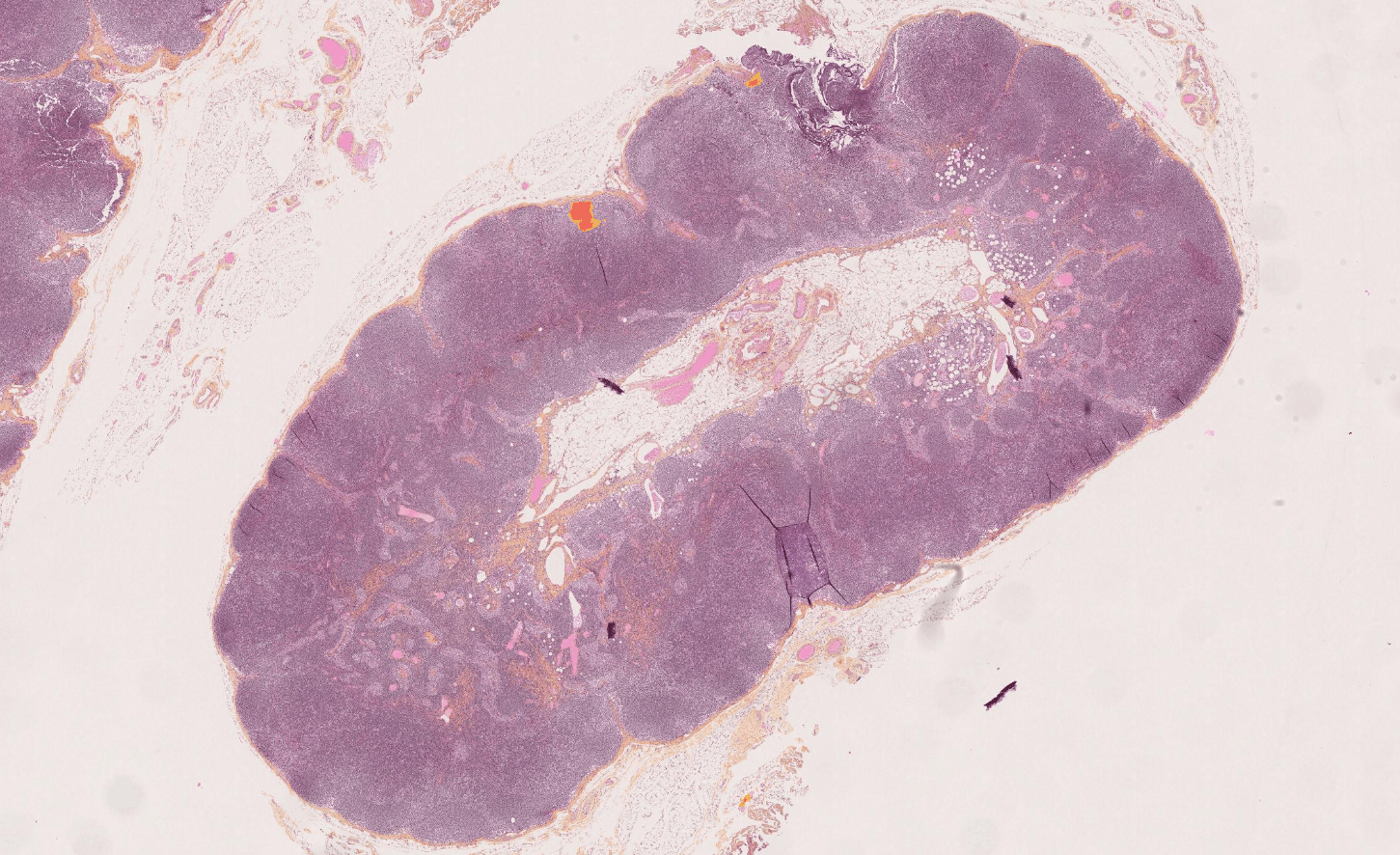
The numbers behind the marking
Under the TNM classification used in breast cancer staging, micrometastases constitute a nodal category in their own right (pN1mi), distinct from node-negative disease, and can shift a patient’s anatomic stage, while remaining small enough to escape an experienced pathologist under everyday clinical time constraints. Independent published studies report pathologist-alone sensitivity for the detection of nodal micrometastases in breast cancer ranging from roughly 38% to 83% depending on study conditions [CAMELYON16, JAMA 2017; Steiner et al., Am J Surg Pathol, 2018].
In Primaa‘s own validation study (225 slides, 7 centers), Cleo Breast’s new metastasis algorithm reached, on its own, 86.1% sensitivity and 92.6% specificity on micrometastasis detection. For comparison, in a separate reader study on a smaller dataset of 40 slides, 9 pathologists working alone on micrometastasis detection reached 77.8% sensitivity and 100% specificity. On macrometastases, already CE-IVDR marked a year ago, Cleo Breast’s clinical validation showed 100% sensitivity and 100% specificity, with a 32% reduction in analysis time.
Primaa deliberately calibrated the algorithm to favor sensitivity over specificity: it is designed to flag every real micrometastasis, even if that occasionally means also pointing to a similar-looking structure, such as a histiocyte, that the pathologist can quickly rule out.
« We greatly valued our collaboration with the Primaa team on the development and evaluation of their AI tool dedicated to the detection of nodal micrometastases in breast cancer, at Gustave Roussy. The results obtained in our cohort are very encouraging. This technology appears particularly promising to us, and further validation on larger cohorts should help confirm and further strengthen its performance ahead of clinical use, » explains Dr. Natacha Joyon, pathologist at Institut Gustave Roussy (IGR).
Beyond Primaa’s own clinical data, independent published research points to the broader potential of AI-assisted micrometastasis workflows: up to 50% less time spent analyzing micrometastasis-positive slides (Steiner et al., Am J Surg Pathol, 2018; Huang et al., Nature Communications, 2022), and a 60% reduction in micrometastasis-positive cases requiring complementary IHC testing to confirm diagnosis, (CONFIDENT-B, Nature Cancer, 2024).
A milestone built with pathologists, for Europe’s pathology labs
« It’s one more step in Primaa’s commitment to transform the daily workflow of the pathologists, because real impact comes from the tools they rely on day after day. With the validated micro-metastasis feature in Cleo Breast, we’re changing the way pathologists assess lymph nodes: they can find the slides of interest in moments and analyze them with precision and confidence », explains Hugo Watel, COO at Primaa.
This new IVDR certification, one of the most demanding regulatory frameworks in medical diagnostics, reinforces the clinical robustness of Cleo Breast. It also supports Primaa’s push to deploy the tool further across European pathology laboratories, as departments face rising case volumes and growing workforce pressure.
Cleo Breast’s micrometastasis detection is also accessible directly within Sectra‘s digital pathology platform, letting pathologists use it without leaving their usual reading environment, a seamless fit into the workflow of one of Europe’s leading imaging viewers.
Cleo Breast is already deployed in numerous French centers, including Institut Curie, and Hôpital Saint-Joseph, with deployment at Poitiers expected soon.
About Primaa
Primaa is a leading provider of integrated AI solutions dedicated to enhancing the accuracy and efficiency of biomarker detection in dermatopathology and breast pathology. Its flagship tools, Cleo Breast and Cleo Skin, support pathologists in delivering faster and more reliable diagnoses, ultimately redefining how tissue lesions are assessed.