


Press Release
Cleo Skin granted FDA Breakthrough Device status
Cleo Skin becomes the first CE-IVDR certified AI tool in dermatopathology to receive FDA Breakthrough Device Designation
- The U.S. Food and Drug Administration (FDA) has granted Breakthrough Device Designation to Cleo Skin, Primaa’s AI solution for skin cancer diagnosis, recognizing it as an innovative device: an important milestone in Primaa’s U.S. regulatory pathway.
- Cleo Skin becomes the first AI tool in dermatopathology to hold both CE-IVDR certification and FDA Breakthrough Device Designation.
- Already used in Europe, Cleo Skin was evaluated in the SkinPerf2026 multicenter study, where it increased melanoma sensitivity and brought junior pathologists to the level of their senior colleagues.
- A U.S. exploratory study demonstrated potential benefits, with a 20% reduction in analysis time and a 17% improvement in sensitivity among junior pathologists.
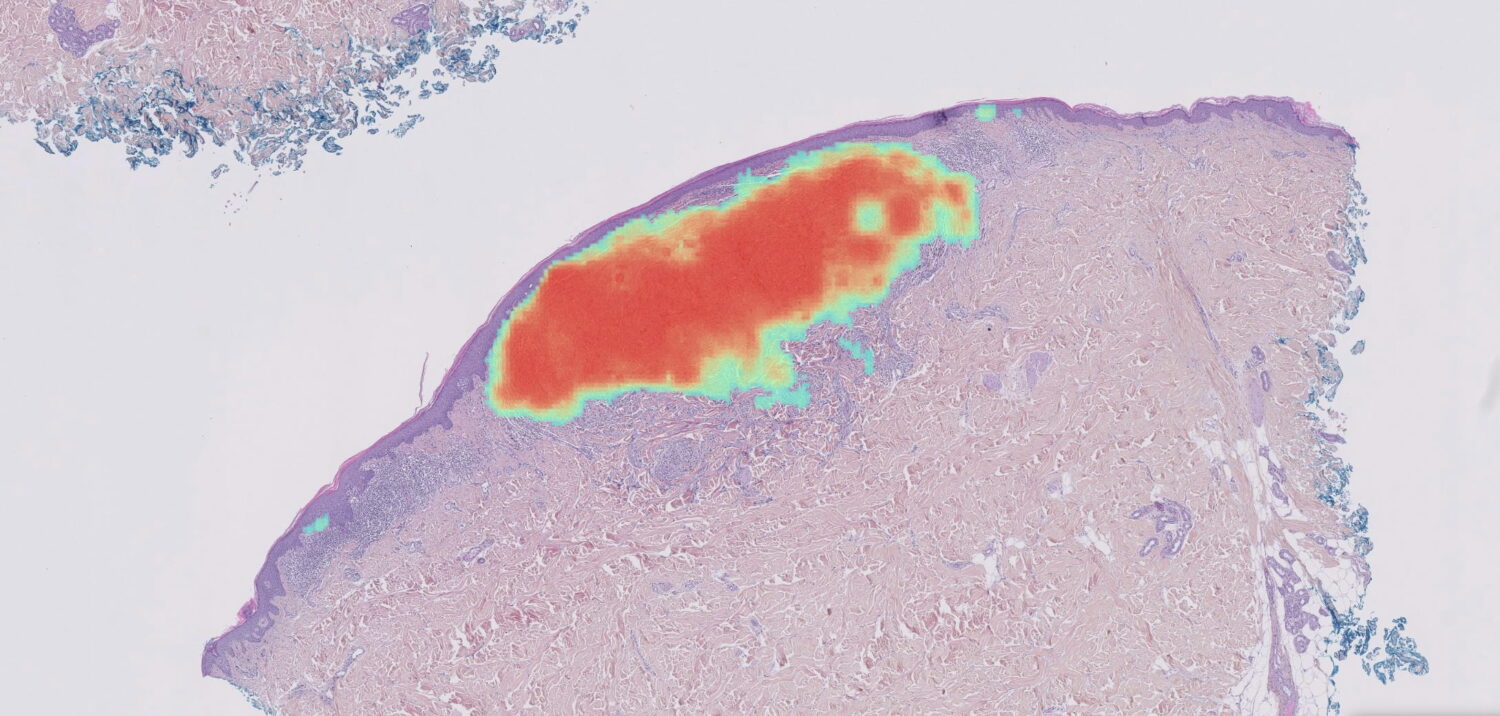
Primaa today announced that the FDA has granted Breakthrough Device Designation to Cleo Skin, its AI solution that helps pathologists diagnose skin cancers on digitized biopsy slides and excised tissues (FDA reference Q262799). CE-IVDR certified in Europe since March 2026, Cleo Skin becomes the first AI tool in dermatopathology to hold both CE-IVDR certification and FDA Breakthrough Device Designation.
Granted on October 21, 2026, the designation recognizes Cleo Skin as an innovative device and gives Primaa prioritized interaction with the FDA ahead of its future U.S. submission. It does not constitute a marketing authorization.
A growing challenge for pathology laboratories
Skin cancer is the most common cancer in the United States, with 234,680 new melanoma cases expected in 2026 (1). Each diagnosis relies on a biopsy that a pathologist must read, measure and classify. As volumes rise and the workforce comes under pressure, laboratories need tools that keep them both fast and accurate, especially for melanocytic lesions, among the most difficult to interpret.
What Cleo Skin brings to pathologists
Cleo Skin analyzes whole slide images of skin biopsies and excisions. It highlights areas suspicious for melanoma, provides an indicative lesion classification, including basal cell carcinoma, squamous cell carcinoma and nevus, and suggests key measurements such as margins, Breslow thickness and mitotic areas. Designed to assist, not replace, the pathologist’s review, it integrates into the image management systems laboratories already use.
Clinically validated and already used in Europe
Cleo Skin is already used by pathology laboratories in Europe. In SkinPerf2026, a multicenter study in which 16 pathologists from 11 French institutions reviewed 313 whole slide images, Cleo Skin raised melanoma sensitivity from 83.8% to 88.6%. Junior pathologists’ sensitivity rose from 79.7% to 88.2% in melanoma cases, reaching the level of their senior colleagues, and the median time to detect mitosis fell by 24%.
“Mitotic counting remains an important but time-consuming part of melanoma assessment. What is particularly useful about Cleo Skin is that its gallery-based mitosis detection can transform this repetitive search into a more focused and efficient review. This is a practical example of how AI can support, not replace, the pathologist by streamlining routine tasks and allowing greater attention to findings that require expert judgment. I believe this type of human-AI collaboration represents the future of pathology.” – Dr. Wonwoo Shon, Director of Dermatopathology Services at Cedars-Sinai Medical Center and Founder of Aimes Diagnostics
Confirmed by U.S. pathologists
In the United States, an exploratory study conducted with PathPresenter, in which seven pathologists reviewed 75 whole slide images with Cleo Skin integrated into their viewer, showed a 20% reduction in analysis time and a 17% improvement in sensitivity among junior pathologists.
“The best AI in pathology works in the background and leaves the judgment in the foreground. Cleo Skin acts like a colleague who has already been through the slide, highlighting where to look and proposing key measurements, so the evidence is ready when the pathologist makes the final decision. In our study, junior pathologists gained the most in accuracy.” – Dr. Rajendra Singh, Associate Vice Chair of Pathology at the University of Pennsylvania and co-founder of PathPresenter
Next step: working with the FDA
The Breakthrough Device Designation recognizes the potential of innovative medical devices to address unmet medical needs and enables prioritized interactions with the FDA. With this designation, Primaa looks forward to engaging with the FDA through the Breakthrough Devices Program to advance Cleo Skin’s U.S. regulatory pathway and prepare for its future market submission.
“Receiving the Breakthrough Device Designation is a strong recognition of our mission: to support every pathologist with reliable assistance on every case. Cleo Skin was built with pathologists, for pathologists, and in Europe, where it is already CE-IVDR marked, they rely on it to work faster and with more confidence, whatever their level of experience.
We look forward to working closely with the FDA through the Breakthrough Devices Program to bring this support to US pathologists, who face the same growing pressure on skin biopsy volumes.” – Hugo Watel, COO, Primaa
Cleo Skin has not been cleared or approved by the FDA. Breakthrough Device Designation is a status recognizing an innovative device; it does not constitute marketing authorization in the United States.
1 Sources: American Cancer Society, Cancer Facts & Figures 2026; American Academy of Dermatology.
About Primaa:
Primaa develops artificial intelligence software capable of detecting various cancer biomarkers. Its tools, Cleo Breast and Cleo Skin, assist physicians in their diagnosis, improving reliability and optimizing examination processing times. Co-founded in 2018 by Marie Sockeel (Pathologist), Fanny Sockeel, and Stéphane Sockeel, the company currently employs 25 people.